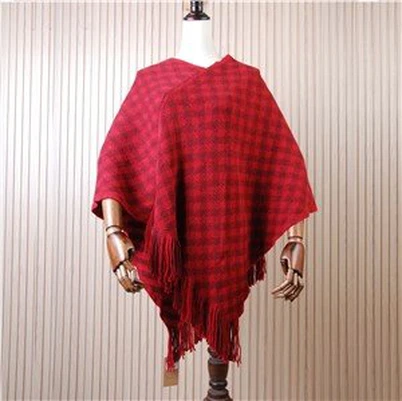
How to make a poncho with a spiral pattern?
Leave a message

How to make a poncho with a spiral pattern?
As a seasoned Knitted Poncho supplier, I've always been fascinated by the art of creating unique and stylish ponchos. One of the most eye - catching designs is the poncho with a spiral pattern. In this blog, I'll share with you a step - by - step guide on how to make such a poncho.
Materials Needed
Before you start, gather the following materials. You'll need high - quality yarn. For a soft and durable poncho, I recommend acrylic yarn. You can check out our Acrylic Knitted Poncho collection for inspiration on the type of acrylic yarn you might want to use. You'll also need knitting needles of an appropriate size for the yarn you've chosen, a tapestry needle for weaving in ends, and a measuring tape.
Choosing the Yarn
The yarn is the foundation of your poncho. Acrylic yarn is a great choice because it is easy to care for, comes in a wide range of colors, and is relatively inexpensive. When selecting the color, think about the spiral pattern. You might want to choose two or three contrasting colors to make the spiral really stand out. For example, a bright primary color against a neutral base color can create a striking effect.
Casting On
To start, you need to cast on the right number of stitches. The number of stitches will depend on the desired width of your poncho and the gauge of your knitting. A good starting point is to cast on around 100 - 120 stitches. Use a long - tail cast - on method, which is stretchy and suitable for the edge of the poncho.
Creating the Base
Knit the first few rows in stockinette stitch (knit one row, purl the next) to create a solid base for your poncho. This base will provide stability and a smooth surface for the spiral pattern. Make sure to keep your tension even throughout these rows to ensure a uniform look.
Starting the Spiral Pattern
The spiral pattern is what gives this poncho its unique look. To create the spiral, you'll use color changes and increases. Start by working in your main color for a few rows. Then, introduce your second color. You can start the color change at one corner of the poncho.
On the row where you introduce the second color, increase one stitch at the edge where the new color starts. This will create a slight flare, which is the beginning of the spiral. Continue knitting in both colors, gradually increasing the number of stitches in the new color as you go. Each time you increase, the spiral will start to take shape.
As you work, make sure to keep track of your rows and stitches. You can use stitch markers to help you keep count. The key is to increase gradually and evenly to create a smooth spiral.
Shaping the Poncho
After a while, you'll need to start shaping the poncho to give it its characteristic shape. To do this, start decreasing stitches on the opposite side of where you started increasing for the spiral. You can use a decrease method like the slip, slip, knit (SSK) or the knit two together (K2Tog).
Continue shaping the poncho by decreasing stitches at regular intervals until you reach the desired width at the top of the poncho. This is where the neck opening will be.
Creating the Neck Opening
Once you've shaped the poncho to the appropriate width, you can create the neck opening. Measure the width you want for the neck and then bind off the stitches in the middle. Leave enough stitches on either side to continue knitting the poncho down to the hem.
Finishing the Hem
After creating the neck opening, continue knitting the poncho down to the bottom. You can finish the hem in a number of ways. You might choose to knit a few rows in a different stitch pattern, like a rib stitch, to give the hem more stability and a finished look. Use your tapestry needle to weave in all the loose ends to make the poncho look neat.
Styling the Poncho
Once your poncho is complete, there are many ways to style it. For women, our Poncho Sweater Ladies Shawl Wrap can serve as an inspiration. You can wear it over a simple dress for a bohemian look or layer it over a sweater and jeans for a casual, everyday outfit.
Quality and Variations
As a Knitted Poncho supplier, I understand the importance of quality. When you're making your own poncho, pay attention to the details. Use high - quality yarn, keep your stitches even, and finish the edges properly.
There are also many variations you can make to the spiral pattern. You can use more colors to create a more complex spiral. You can also adjust the size of the spiral by changing the frequency of the increases and decreases.
Blocking the Poncho
Blocking is an important step in finishing your poncho. It helps to even out the stitches and give the poncho a more professional look. Lay your poncho out on a flat surface covered with a towel. Spritz it lightly with water and then gently stretch it into shape, following the pattern lines. Let it dry completely before wearing or storing.
Using the Poncho as a Business Model
If you're interested in joining the world of Knitted Poncho suppliers, creating your own ponchos with unique spiral patterns can be a great way to stand out in the market. Our Women Knit Poncho collection showcases the kind of high - quality products that are in demand.
Connecting with the Market
If you're a retailer looking to stock unique knitted ponchos, or if you're an individual interested in bulk purchases, I encourage you to reach out. We have a wide range of ponchos in different styles, colors, and sizes, and we're always happy to discuss custom orders. Whether you're looking for a small batch to start a new line in your store or a large order for a special event, we can work with you to meet your needs.


Making a poncho with a spiral pattern is a fun and rewarding project. It allows you to express your creativity while creating a beautiful and practical piece of clothing. Whether you're a beginner knitter or an experienced one, I hope this guide has inspired you to give it a try.
References
- Knitting Basics Book, a general guide on knitting techniques.
- Textile Design Magazine, articles on color combinations and patterns for knitted garments.